Securing a professional pest control service Riverview homeowners trust requires addressing the moisture gradients and soil disruption unique to the Alafia River Basin. Rapid residential development pushes native subterranean termites, American cockroaches, and aggressive fire ants out of cleared acreage directly toward concrete slabs and soffits.

Pest control service in Riverview is an exterior and interior structural defense treatment that stops wood-destroying organisms, invasive insects, and rodents common to eastern Hillsborough County ecosystems.
Every service reflects the same meticulous attention to detail, whether it's a single job or a larger pest control service project across Riverview.
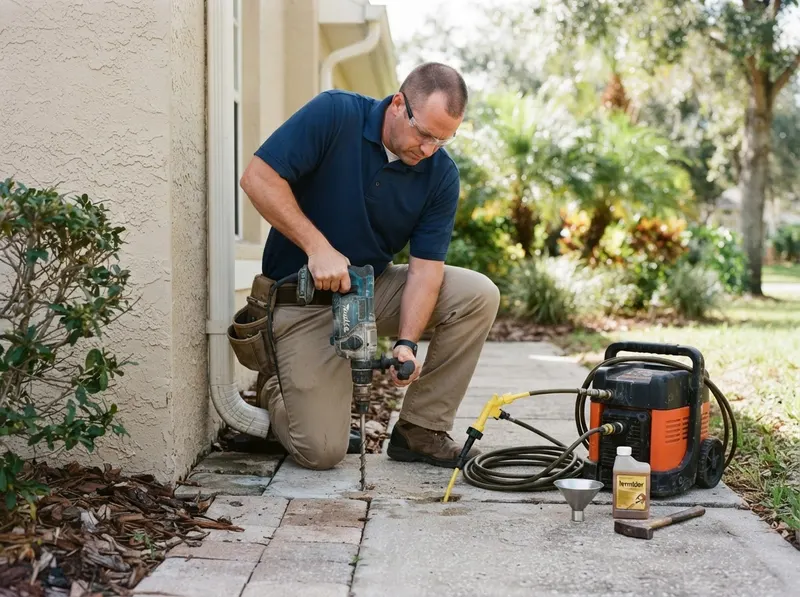
Subterranean termites, including Eastern subterranean and aggressive Formosan species, create hidden mud shelter tubes across foundation footings to access pine framing timbers throughout eastern Hillsborough County. Technicians execute comprehensive visual attic, crawlspace, and foundation perimeter inspections using acoustic emission sensors and thermal imaging to locate feeding galleries. Corrective treatments involve trenching and rodding non-repellent liquid termiticides such as fipronil along structural slabs at a rate of 4 gallons per 10 linear feet, establishing an undetectable continuous chemical barrier in the sandy soil. Alternatively, technicians install tamper-resistant monitoring bait stations spaced every 10 to 15 feet around the perimeter dripline. Foraging workers ingest the chitin-synthesis inhibitors in the bait and distribute the active ingredient through trophallaxis throughout the subterranean nest, eliminating the primary reproductive queen and terminating the colony without disrupting the homeowner's interior living spaces or landscaping.
Get a quote →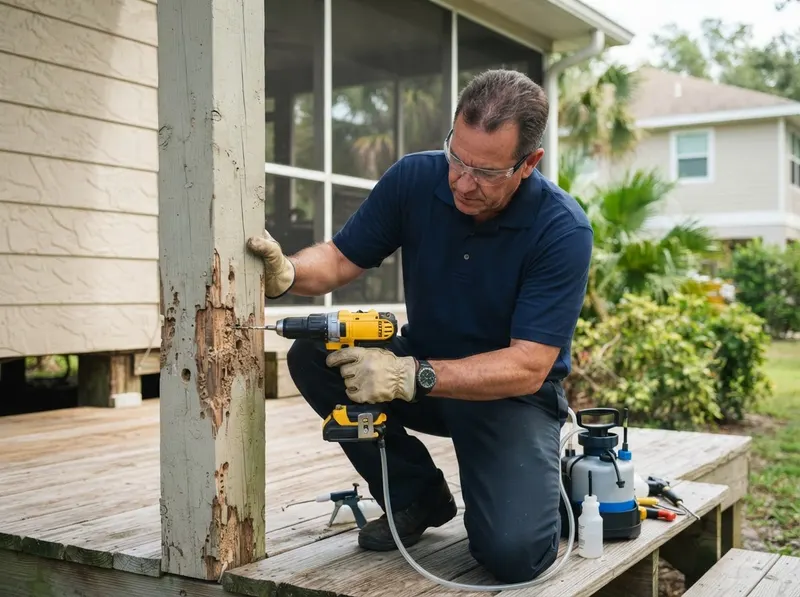
Drywood termites establish self-contained colonies directly inside structural framing, roof trusses, fascia boards, and window jambs without requiring contact with the soil. Infestations are recognized by clean hexagonal fecal pellets (frass) pushed through kick-out holes smaller than 1 millimeter. Technicians inspect high-risk roof perimeters, wood eaves, and structural attic spaces to isolate localized timber galleries. Precision treatment involves drilling direct injection ports into affected wood members and introducing concentrated liquid borate or non-repellent micro-foam termiticides under 30 to 50 PSI of pressure. The expanding foam travels through the internal feeding chambers, penetrating deep into the cellular structure of the timber to kill both working nymphs and alates on contact. This method preserves architectural woodwork, avoids the extensive preparation and family relocation associated with whole-structure tenting, and leaves a persistent mineral barrier that prevents future colonization.
Get a quote →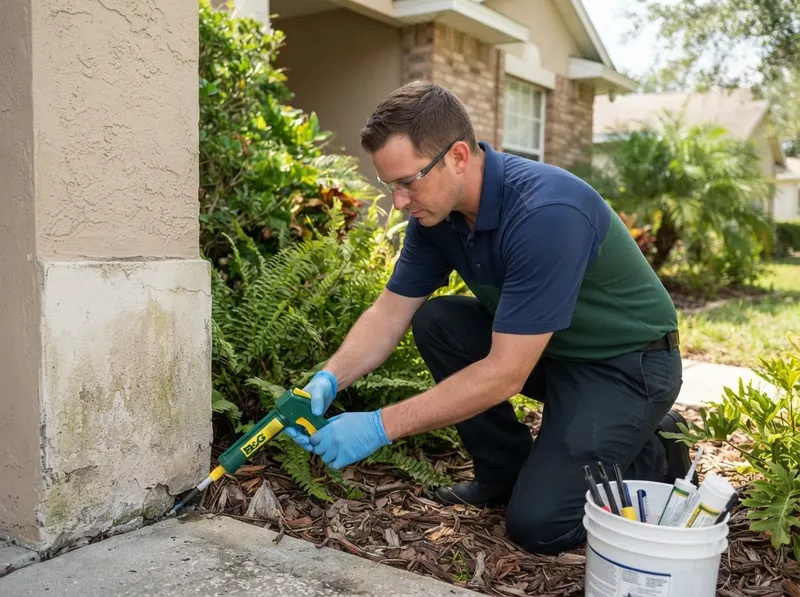
American cockroaches (Periplaneta americana), colloquially known across Central Florida as palmetto bugs, inhabit damp pine bark mulch, sewer mains, and palm fronds before invading home interiors through weeping screeds, garage door bottom seals, and plumbing chases. Adult specimens exceed 1.5 to 2 inches in length and thrive under Riverview's humid conditions. Defense begins outdoors with a high-pressure perimeter wash application delivering micro-encapsulated pyrethroids and insect growth regulators across an 8-foot protective band, extending 3 feet vertically up the foundation stem wall and 5 feet horizontally across the perimeter grade. Technicians systematically dust dry plumbing penetrations inside wall voids with moisture-resistant silica aerogel and deploy targeted synthetic attractant baits along dark garage thresholds and utility service entries. This dual-layer protocol intercepts migrating roaches before they enter living quarters and stops indoor reproduction cycles.
Get a quote →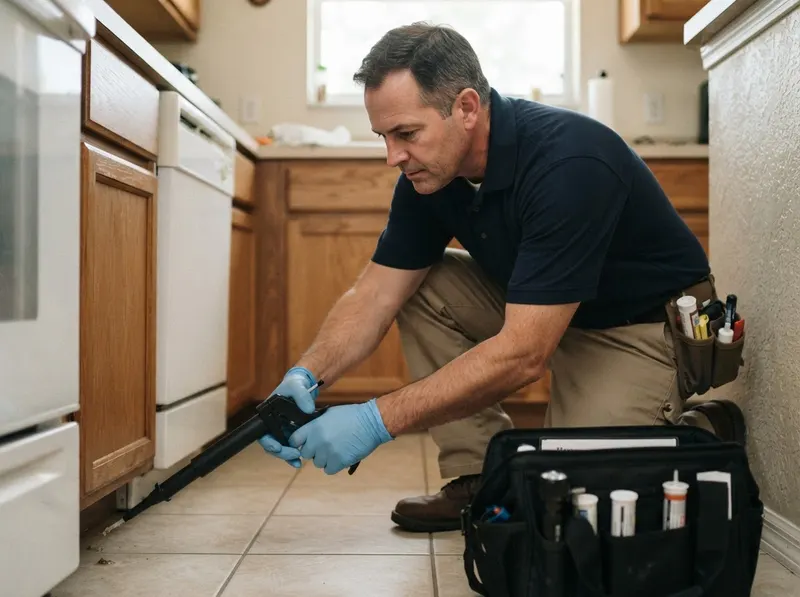
German cockroaches (Blattella germanica) present severe structural and sanitary hazards by colonizing kitchens, bathrooms, and food pantry cabinets. Because females carry ootheca egg capsules containing up to 40 nymphs, interior populations escalate rapidly if addressed with store-bought repellent aerosols that scatter the nest. Our clean-out protocol uses precise crack-and-crevice placements of non-repellent abamectin and indoxacarb gel baits applied directly into cabinet hinge pockets, behind dishwashers, and underneath compressor motor mounts. Technicians combine these attractants with concentrated hydroprene insect growth regulators that chemically sterilize immature nymphs, preventing them from developing into reproductive adults. Follow-up monitoring visits at 14 and 30 days confirm population decline through sticky trap counts, ensuring complete nest collapse without broadcasting airborne chemical residues over food-preparation countertops or family dining areas.
Get a quote →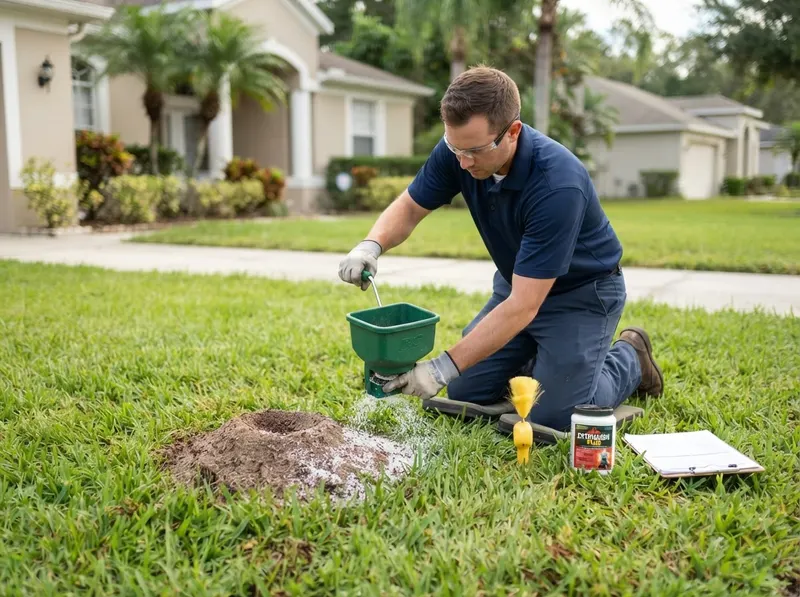
Red imported fire ants (Solenopsis invicta) construct extensive subterranean nest networks across Riverview's sandy lawns, school zones, and community turf, posing serious sting hazards to children and domestic pets. Traditional single-mound liquid drenching fails because colonies simply relocate their queens several feet through interconnected lateral foraging tunnels. Our technicians apply a comprehensive two-stage turf defense: first, broadcasting specialized low-toxicity granular bait containing metaflumizone or s-methoprene across the entire yard footprint at calibrated rates of 1.5 pounds per acre. Worker ants carry the micro-particles down into subterranean chambers to feed the colony queen, halting egg development within 7 to 14 days. Second, technicians inject persistent pyrethroid contact dusts directly into deep satellite mounds surrounding electrical junction boxes, irrigation valve manifolds, and air conditioning equipment pads to prevent expensive electrical short-circuits.
Get a quote →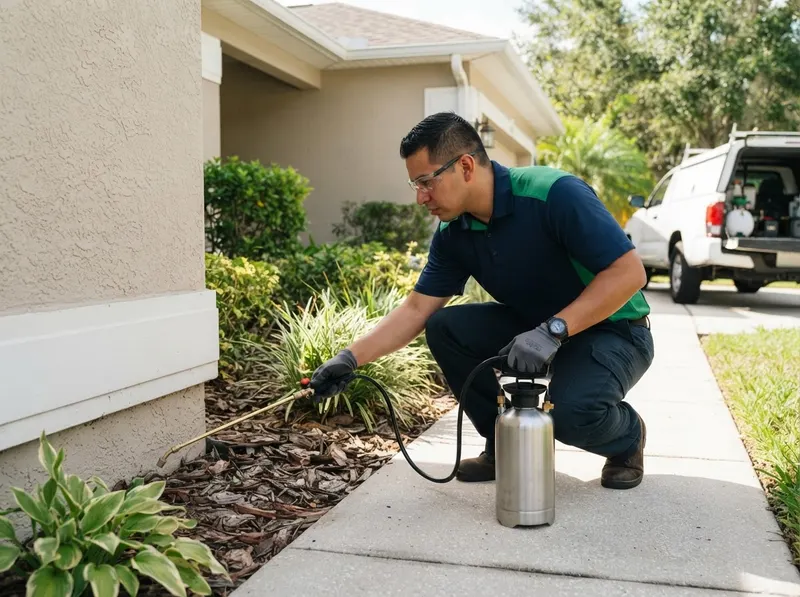
Ghost ants (Tapinoma melanocephalum), known locally as sugar ants due to their microscopic size and sweet-foraging habits, form vast polygyne super-colonies containing multiple reproductive queens across wall voids, bathroom baseboards, and window trim. Because repellent sprays trigger immediate colony budding, splitting a single infestation into dozens of isolated satellite nests, effective eradication demands an intelligent, non-repellent strategy. Field specialists identify exterior trailing corridors along exterior stucco expansion joints, foundation ledges, and tree limbs brushing the roof. Technicians apply slow-acting liquid and gel baits formulating thiamethoxam or dinotefuran directly along these primary travel highways. Exterior foundation perimeters receive a micro-targeted spray of non-detectable insecticides, allowing foraging workers to walk through the treated zone unharmed, transport the lethal active compound back into structural nesting sites, and completely eradicate the colony through social food sharing.
Get a quote →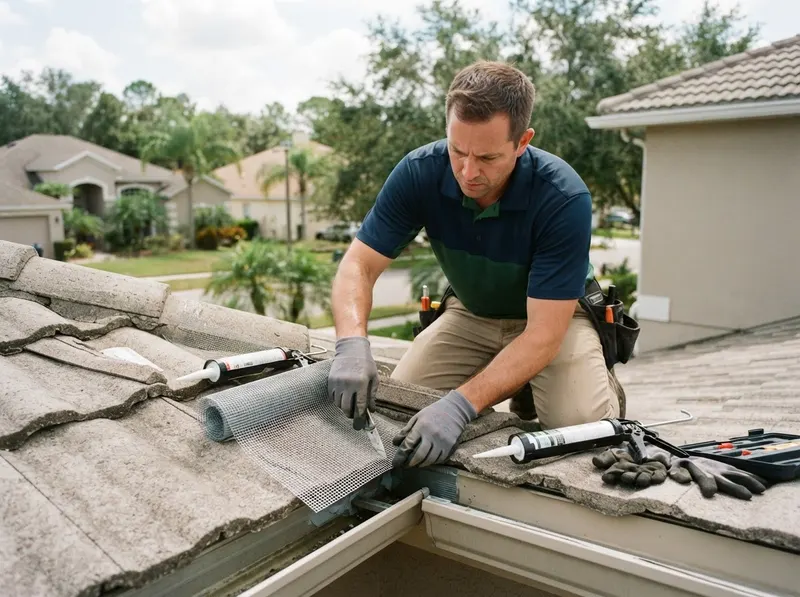
Roof rats (Rattus rattus) exploit Riverview's mature live oak canopies, Spanish moss, and dense palm trees to access residential roof valleys, plumbing vent pipes, and vinyl soffits. Once established in attic insulation, rodents gnaw electrical wiring, soil HVAC flex ducting, and leave territorial pheromone trails. Our complete exclusion process begins with a 36-point structural roof and crawlspace audit to identify every opening larger than 0.25 inches. Technicians mechanically seal entry points using heavy-duty 18-gauge galvanized steel wire hardware cloth, metal flashing, and steel-reinforced expanding foam that rodents cannot chew through. Inside the attic, technicians establish an intensive mechanical trapping sequence utilizing snap traps set along elevated roof timbers and ceiling joists, completely avoiding secondary poisoning hazards to domestic neighborhood dogs and native birds of prey. Traps are monitored and reset until zero activity is recorded.
Get a quote →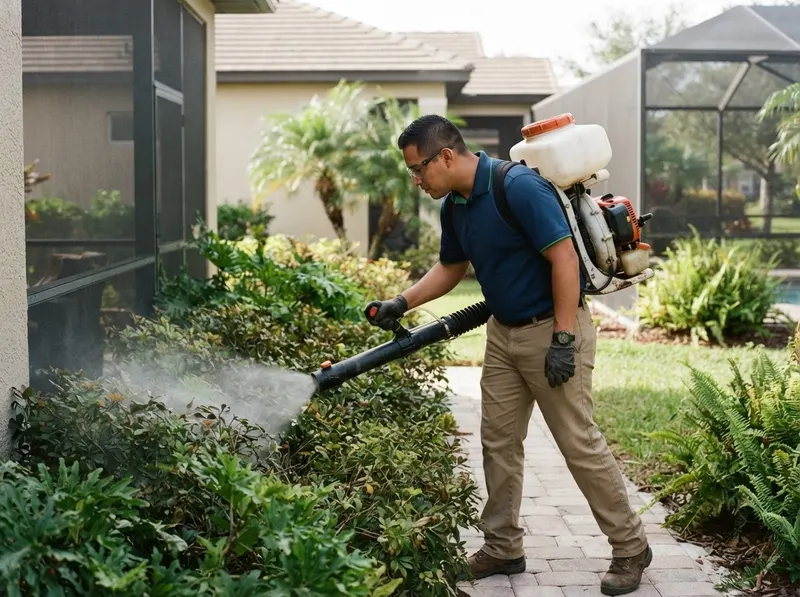
Riverview's proximity to the Alafia River Basin, marsh wetlands, and residential retention ponds creates extensive breeding zones for Aedes albopictus and Culex mosquitoes from April through November. Technicians deliver high-performance mosquito barrier reductions using commercial backpack mist-blowers that atomize residual insecticides and insect growth regulators into fine 50-micron droplets. These micro-droplets cling to the undersides of dense foliage, ornamental shrubs, tree canopies up to 10 feet, and dark overhangs beneath pool lanai frames where adult mosquitoes rest during peak daylight heat. Additionally, technicians inspect outdoor drainage basins, bird baths, and potted plant saucers, treating standing non-potable water with biological Bacillus thuringiensis israelensis (BTI) dunks. BTI specifically targets and destroys aquatic mosquito larvae within 24 hours without harming beneficial bees, butterflies, fish, or household pets.
Get a quote →You get a firm, itemized quote for your pest control service before any work begins, no surprises, no pressure.
Careful prep, tidy work, and a full cleanup when we are done. We treat your home and belongings like our own.
The same trusted, background-checked team from the first call to the final check.
Selecting the right pest management approach depends strictly on the pest biology, structural entry points, and moisture conditions around the property. If your home has subterranean termite activity or swarming alates emerging along baseboards, choose an underground non-repellent liquid trench treatment or an exterior bait station perimeter; if you are dealing with seasonal German cockroaches or stored-product beetles inside kitchen pantries, choose a targeted indoor crack-and-crevice baiting protocol with insect growth regulators. The trade-off is treatment location versus residual duration: exterior liquid termiticides bind directly to the soil to provide protection for up to 5 to 8 years, whereas interior cockroach gels require targeted consumption and precise moisture management inside the living space.
25 inches with galvanized steel mesh. The trade-off is mechanical sealing costs versus continuous exterior surface application: exclusion permanently locks out vertebrate pests, whereas perimeter sprays require routine maintenance visits every 60 to 90 days to withstand Florida's heavy subtropical rainfall and UV breakdown. If biting mosquitoes make your swimming pool lanai or screened patio unusable from May through October, choose a recurring monthly backpack misting protocol applied to broadleaf foliage and shaded soffits; if drywood termites are actively infesting attic rafters or door casings without soil contact, choose direct structural wood injection or whole-structure thermal remediation.
The trade-off is focused spot-treatment precision versus comprehensive enclosure containment: foliage misting provides immediate seasonal exterior comfort around outdoor living spaces but does not prevent structural timber pests, whereas localized timber injections stop wood rot and insect burrowing inside specific wall studs without requiring off-site human evacuation.
Every project gets a firm, written price after a free on-site visit. Ranges below for orientation.
Tell us about your pest control service job and we'll send a clear, written quote, usually the same day. Or just call and talk to a real Riverview pro.
(656) 255-0926
Riverview's continuing geographic expansion along the US-301, Interstate 75, and Boyette Road corridors consistently overturns dense, sandy scrub soils, displacing established subterranean insect and rodent colonies directly into adjacent residential developments. Properties situated near the high-moisture boundaries of the Alafia River Basin, Bell Creek Nature Preserve, and Balm-Boyette Scrub Preserve encounter intense pest pressures, particularly during the humid summer rainy season when high water tables force palmetto bugs, ghost ants, and subterranean termites up onto concrete foundations. Construction techniques common to Riverview homes, such as concrete slab-on-grade foundations with exterior stucco finishes and roof valleys designed for high-wind resistance, create specific vulnerability zones where weep screeds sit close to turf mulch and barrel tiles provide access to attic insulation. Furthermore, the region receives more than 50 inches of annual rainfall, accompanied by intense midday ultraviolet radiation that rapidly degrades conventional consumer pest sprays within weeks. Tailoring pest barrier applications to Riverview's unique soil permeability, persistent humidity, and architectural construction methods ensures treatments withstand extreme subtropical weather cycles without washing out, delivering reliable defense for families and pets across eastern Hillsborough County.
Free estimates for Riverview & the surrounding area.
 Suncoast Heron Pest Control